
Cold climates place structural stress on battery systems that often remains underestimated during procurement and design stages.
Below −20 °C, widely deployed lithium iron phosphate systems encounter physical constraints that directly affect performance, reliability, and operating costs.
Electrolyte behavior, rising internal resistance, and voltage instability trigger frequent intervention from battery management systems, often resulting in shutdowns or continuous heating.
This dynamic converts low upfront investment into elevated operational expenditure. Systems engineered specifically for sustained cold conditions demonstrate materially different outcomes in availability and long-term economics.
Battery performance in winter conditions is governed by physics rather than specifications derived from controlled environments.
At low temperatures, electrochemical reactions slow, internal resistance increases, and voltage stability deteriorates. These effects are amplified in grid-scale and stationary energy storage applications.
For operators in Nordic regions, these constraints influence not only performance but system uptime and cost structures.
Understanding how different chemistries and system designs respond to cold is essential for aligning energy storage deployments with real operating conditions.
Energy storage adoption continues to expand across Northern Europe, driven by renewable integration and grid stabilization needs.
Many deployments rely on technologies optimized for moderate climates, with limited adaptation for extended sub-zero operation.
As installations move further north, winter performance has emerged as a decisive factor in system viability.
This has shifted attention from nominal capacity and CAPEX toward operational reliability, maintenance demands, and lifecycle costs.
These factors directly influence availability and system economics in cold climates.
Operators relying on standard battery configurations face higher downtime and increased maintenance during winter months.
Frequent heating cycles and protective shutdowns reduce effective utilization and increase energy losses.
Systems designed specifically for cold environments require less active thermal management and maintain more stable performance.
This translates into higher availability and more predictable operating costs over the system lifetime.
From an investment perspective, cold-climate performance alters expected returns and risk profiles.
Lower upfront costs may mask higher long-term operating expenses when systems are not engineered for winter conditions.
Technologies demonstrating stable performance at low temperatures reduce revenue volatility and operational risk.
Cold-adapted energy storage solutions therefore offer clearer long-term economics in Nordic deployments.
As energy storage expands further into cold regions, winter performance will increasingly influence technology selection.
Designs optimized for sustained low temperatures are likely to gain relevance.
Evaluation criteria will continue shifting from nominal specifications to real-world availability and operating efficiency.
Cold-climate engineering is therefore becoming a central component of energy storage strategy.
Q1: Why do standard battery systems struggle in Nordic winters?
Low temperatures increase internal resistance and reduce voltage stability, triggering protective system responses.
Q2: How does sodium-ion chemistry perform in cold conditions?
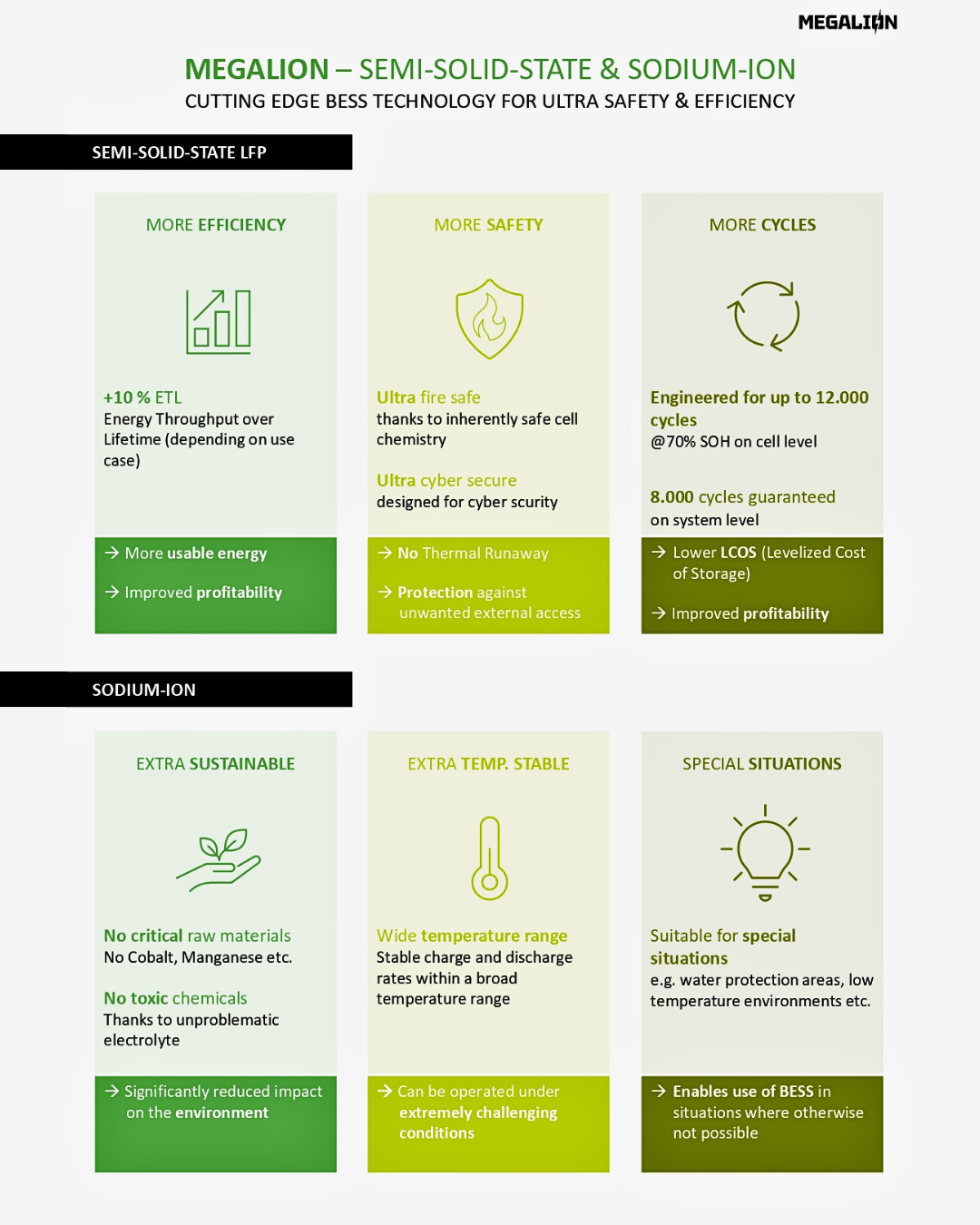
Sodium-ion systems retain a higher share of capacity and require less active heating at sub-zero temperatures.
Q3: Why does cold performance affect operating costs?
Increased heating, reduced uptime, and frequent shutdowns raise energy losses and maintenance requirements.
Winter conditions expose the physical limits of many battery systems.
Cold-induced performance losses affect availability, efficiency, and operating economics.
Technologies engineered for sustained low temperatures demonstrate materially different outcomes.
Real winters require system designs aligned with real operating environments.