 ×
× We’ll be at “The 3 Best Public Funding Programs for Startups & Scaleups”with
 Victoria Hoffmann&
 Dr. Marko Häckel•Oct 13 at 11:00–12:00 CEST•
×We’ll be at “The 3 Best Public Funding Programs for Startups & Scaleups”withVictoria Hoffmann&Dr. Marko Häckel•Oct 13 at 11:00–12:00 CEST•
Dr. Marko Häckel•Oct 13 at 11:00–12:00 CEST•
×We’ll be at “The 3 Best Public Funding Programs for Startups & Scaleups”withVictoria Hoffmann&Dr. Marko Häckel•Oct 13 at 11:00–12:00 CEST•
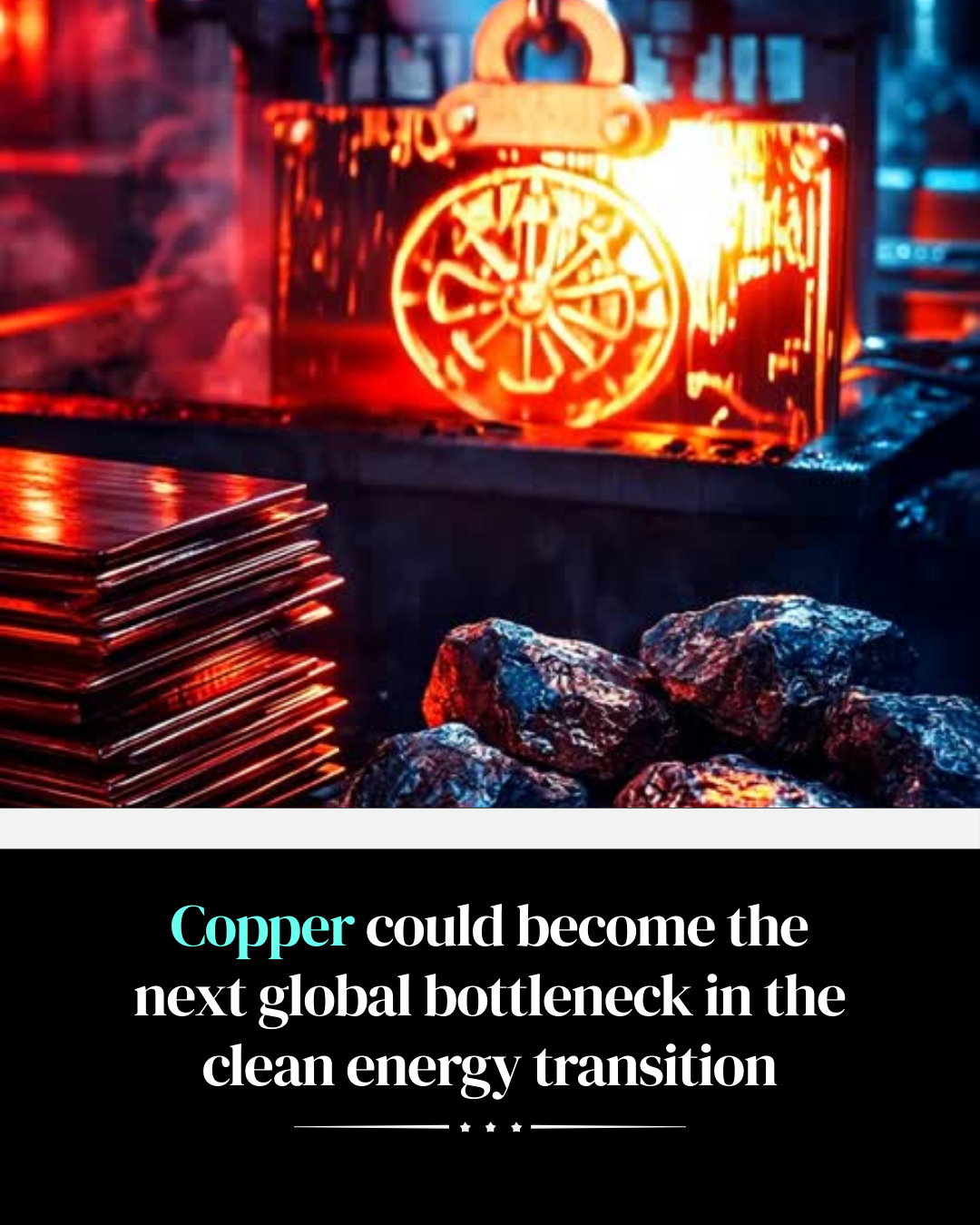
The global transition toward clean energy is accelerating, but it may face a critical constraint: copper supply. As electrification expands across industries, demand for copper is rising faster than traditional mining output can support. A recent development from Queensland-based startup Banksia Minerals highlights a potential solution. Backed by up to $5 million from the Australian Renewable Energy Agency, the company is advancing an electrochemical process capable of extracting copper from low-grade resources that were previously considered uneconomical. This shift signals a broader trend where innovation in processing, rather than discovery, may redefine resource availability.
Copper is a foundational material in modern infrastructure, playing a central role in electrical systems, renewable energy technologies, and electrified transport. As global efforts intensify to reduce carbon emissions, the demand for copper is increasing rapidly. However, conventional mining methods struggle to keep pace, particularly as high-grade deposits become scarcer. This creates a growing imbalance between supply and demand, positioning copper as a potential bottleneck in the clean energy transition.
The clean energy transition relies heavily on electrification, which in turn depends on copper-intensive systems such as solar panels, wind turbines, electric vehicles, and grid infrastructure. Industry estimates suggest that copper demand could double over the coming decades. At the same time, declining ore grades and increasing environmental constraints are making traditional mining more expensive and less efficient. This dynamic is pushing the industry toward alternative extraction methods and driving investment into technologies that can unlock previously inaccessible resources.
While primarily an industrial issue, copper supply constraints can indirectly affect broader systems, including healthcare. Reliable energy infrastructure is essential for modern healthcare delivery, from hospital operations to medical device manufacturing. Disruptions in critical material supply chains can impact infrastructure development and operational stability, highlighting the interconnected nature of resource availability and essential services.
For investors, copper represents both a strategic opportunity and a systemic risk. Companies developing innovative extraction technologies may benefit from strong market demand and policy support. However, the sector also involves technological, regulatory, and scaling risks. Early-stage ventures like Banksia Minerals demonstrate how targeted funding and government backing can help bridge the gap between research and commercial deployment. Investors should evaluate not only resource ownership but also technological differentiation and scalability.
Despite promising advancements, several challenges remain. The scalability of new extraction technologies must be proven in industrial settings. Economic viability depends on operational efficiency and market conditions. Regulatory approvals and environmental considerations may also influence adoption timelines. Additionally, geopolitical factors can affect access to resources and investment flows. The key question is whether innovation can outpace the growing demand for copper.
The future of the clean energy transition may hinge on how effectively the global ecosystem addresses critical material constraints. Innovations that enable the use of low-grade resources could significantly expand supply and reduce dependency on traditional mining. If successful, these technologies may not only alleviate bottlenecks but also reshape how industries approach resource utilization. The broader implication is clear: the next wave of progress may come not from discovering new resources, but from rethinking how existing ones are processed.
Q1: Why is copper important for clean energy?
Copper is essential for electrical conductivity and is widely used in renewable energy systems, electric vehicles, and power grids.
Q2: What is low-grade copper and why is it important?
Low-grade copper refers to ore with lower concentrations of copper. New technologies can make it economically viable, expanding available supply.
Q3: How does new technology help solve supply issues?
Innovative extraction methods can access previously unusable resources while reducing energy consumption and environmental impact.
Copper is emerging as a critical factor in the clean energy transition. As demand accelerates, supply constraints are becoming more visible. Innovations like electrochemical extraction of low-grade resources offer a promising pathway to address this gap. The success of these approaches will depend on their scalability, economic viability, and integration into existing systems. Ultimately, the transition to a sustainable energy future may depend as much on material innovation as on energy technology itself.