
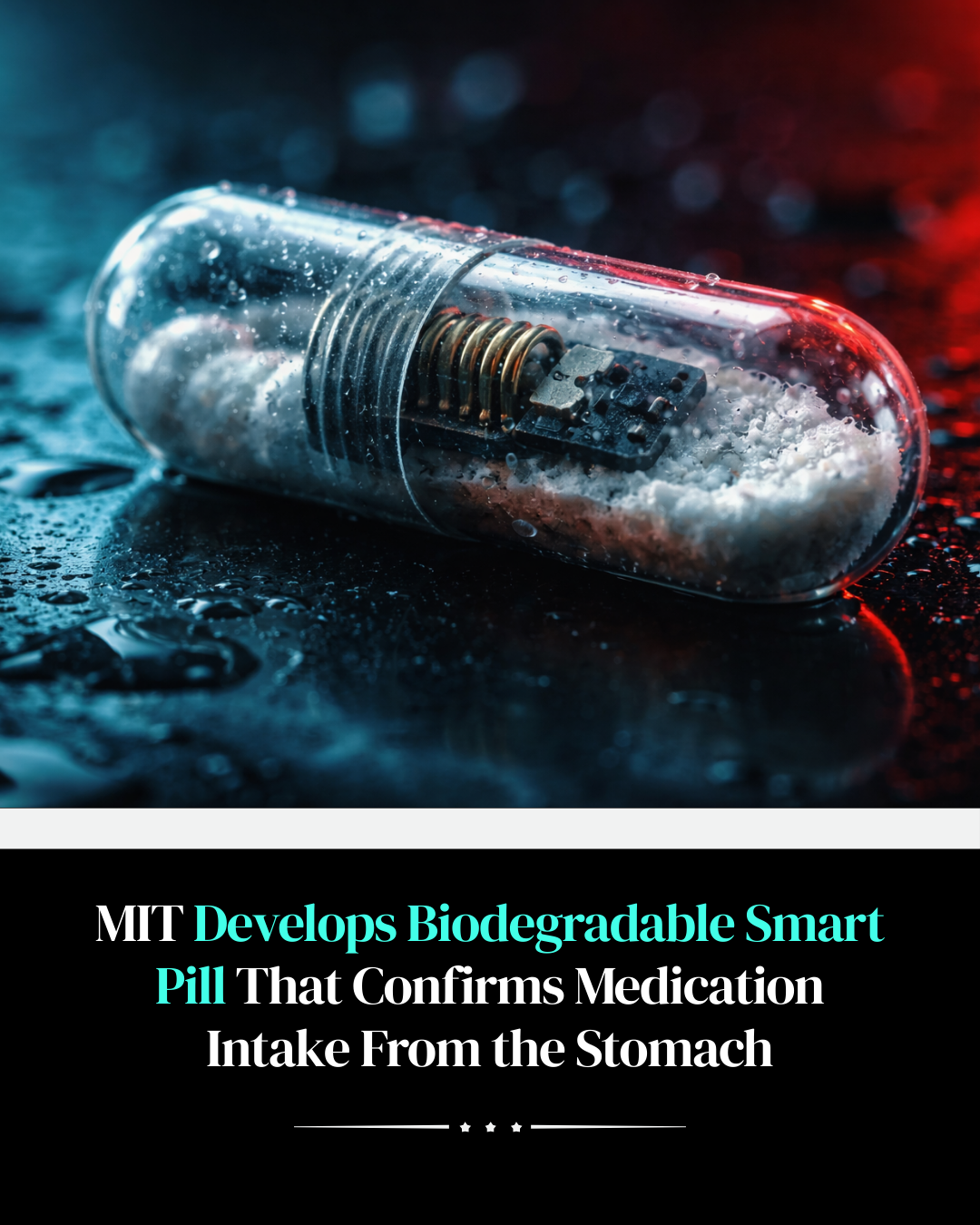
Medication non-adherence remains one of healthcare’s most persistent and costly blind spots. The reference describes a biodegradable smart pill developed by researchers at MIT that transmits a radio signal from the stomach after ingestion. Once swallowed, the device confirms intake electronically and then safely degrades, leaving only a microscopic component that exits the body naturally. This design shifts the adherence model from reminders and behavioral nudges to verifiable confirmation. For patients managing transplant recovery, HIV, tuberculosis, and other critical conditions, confirmation of ingestion can directly influence outcomes. The underlying premise is systemic rather than individual: adherence challenges are not merely patient failures but structural gaps in monitoring and verification. By combining ingestible electronics with biodegradable materials, the system aims to reduce long-term biological risk while improving clinical visibility into medication use.
Healthcare systems depend on patients taking prescribed medication correctly and consistently. Yet adherence rates across chronic and high-risk conditions remain inconsistent, contributing to preventable complications and avoidable costs. Traditional solutions—education, reminders, and self-reporting—rely heavily on trust and motivation. The reference introduces a technological alternative: an ingestible device that communicates directly from the stomach to confirm ingestion. After transmission, the biodegradable components dissolve safely, minimizing residual risk. This reframes adherence as a verification problem rather than solely a behavioral one. In high-stakes treatments such as organ transplantation, infectious disease management, and long-term therapy, confirmation can support more precise clinical decisions. By embedding communication capability within a pill format, the approach integrates into existing treatment routines while adding a layer of measurable certainty.
Digital health and medtech sectors are increasingly focused on measurable outcomes and value-based care. Payers and providers face financial pressure to reduce preventable hospitalizations linked to missed doses. Medication non-adherence contributes significantly to wasted pharmaceutical spending and avoidable complications. Technologies that offer objective confirmation of ingestion may align with reimbursement models tied to outcomes rather than volume. Biodegradable electronics represent an emerging intersection of materials science and healthcare engineering, aiming to reduce device persistence in the body. At the same time, privacy and consent considerations are central in digital health adoption. Systems designed for high-risk therapies may see earlier uptake due to the clinical stakes involved. As verification tools mature, healthcare providers may integrate ingestion data into remote monitoring systems, improving treatment adjustments and risk assessment without relying solely on self-reported adherence.
The reference outlines several structural insights:
These elements position the technology as a systemic adherence solution rather than a simple reminder tool.
For healthtech startups, the development signals opportunity in verification-based healthcare models. Solutions that transform unobservable patient behavior into measurable clinical data can strengthen treatment optimization and payer alignment. Startups operating in digital therapeutics, remote monitoring, and chronic care management may integrate ingestion confirmation into broader care platforms. However, regulatory approval, data security, and ethical transparency are critical. Technologies must demonstrate safety, reliability, and compliance with medical device standards. Partnerships with pharmaceutical companies could enable co-packaged therapies where verification enhances therapeutic value. Startups that align biodegradable materials innovation with data infrastructure may establish differentiated positions in the medtech landscape.
Investors evaluating ingestible digital devices should assess both clinical relevance and reimbursement potential. Technologies addressing non-adherence can reduce downstream healthcare costs, strengthening the value proposition in value-based care models. Differentiation lies in material safety, transmission reliability, and integration into provider workflows. Regulatory risk and patient acceptance must be carefully analyzed. Privacy safeguards and transparent consent mechanisms are essential for sustainable adoption. Market potential may be strongest in high-cost therapeutic areas where confirmation significantly alters outcomes. Investors should consider partnerships with healthcare systems and pharmaceutical firms as indicators of commercial viability.
Despite its promise, ingestion verification raises ethical and operational considerations. Patient consent, data security, and transparency must be prioritized to avoid perceptions of surveillance. Biodegradable components must consistently meet safety standards across diverse populations. There is also the question of cost-effectiveness relative to existing adherence strategies. Adoption may vary across therapeutic areas depending on clinical urgency and reimbursement alignment. Additionally, integration with electronic health records and remote monitoring platforms must be seamless to avoid workflow disruption. The long-term durability of transmission reliability and material breakdown processes will require ongoing validation.
As healthcare shifts toward outcome-based reimbursement, technologies that reduce uncertainty around treatment adherence are likely to gain strategic relevance. Biodegradable ingestible devices represent a convergence of materials science, communications engineering, and clinical need. The near-term adoption path may focus on high-risk, high-cost conditions where confirmation materially improves care decisions. Over time, verification-based models could expand into broader chronic care management. The broader implication is systemic: when invisible treatment gaps become measurable, care pathways can be redesigned around data rather than assumption. If implemented with ethical safeguards and clinical validation, ingestion-confirmation technologies may redefine adherence monitoring in modern healthcare.
Q1: How does the smart pill confirm ingestion?
After reaching the stomach, the device transmits a radio signal indicating that it has been swallowed, providing verifiable confirmation of intake.
Q2: Is the device safe to ingest?
The system is designed using biodegradable materials that safely break down, with only a microscopic component exiting the body naturally.
Q3: Why is adherence verification important?
Medication non-adherence contributes to preventable complications and significant healthcare costs. Objective confirmation supports better clinical decisions and outcome tracking.
The biodegradable smart pill developed by MIT researchers addresses a longstanding healthcare blind spot: uncertainty around medication adherence. By transmitting a signal from within the stomach and safely degrading afterward, the system transforms ingestion into verifiable data. In high-risk treatments, confirmation can directly influence outcomes and reduce preventable complications. Rather than relying solely on reminders or trust, the approach reframes adherence as a measurable systems challenge. If validated and ethically deployed, ingestion-confirmation technology may play a meaningful role in improving treatment reliability, reducing waste, and modernizing digital health infrastructure.