 ×
× We’ll be at “The 3 Best Public Funding Programs for Startups & Scaleups”with
 Victoria Hoffmann&
 Dr. Marko Häckel•Oct 13 at 11:00–12:00 CEST•
×We’ll be at “The 3 Best Public Funding Programs for Startups & Scaleups”withVictoria Hoffmann&Dr. Marko Häckel•Oct 13 at 11:00–12:00 CEST•
Dr. Marko Häckel•Oct 13 at 11:00–12:00 CEST•
×We’ll be at “The 3 Best Public Funding Programs for Startups & Scaleups”withVictoria Hoffmann&Dr. Marko Häckel•Oct 13 at 11:00–12:00 CEST•
 By Daniel Bode

Picking the wrong fundraising platform wastes time you don't have. Some platforms cap you at accredited investors only. Others take a cut of every dollar. A few have no automation at all, meaning you're still managing a spreadsheet while your competitors close rounds faster. Here are the 10 best startup fundraising platforms right now, and who each one is actually built for.
Zefyron is an AI-driven platform that connects startups with investors, corporates, and academic institutions through intelligent matchmaking and automated fundraising workflows. It's built for founders who want more than a static investor directory.
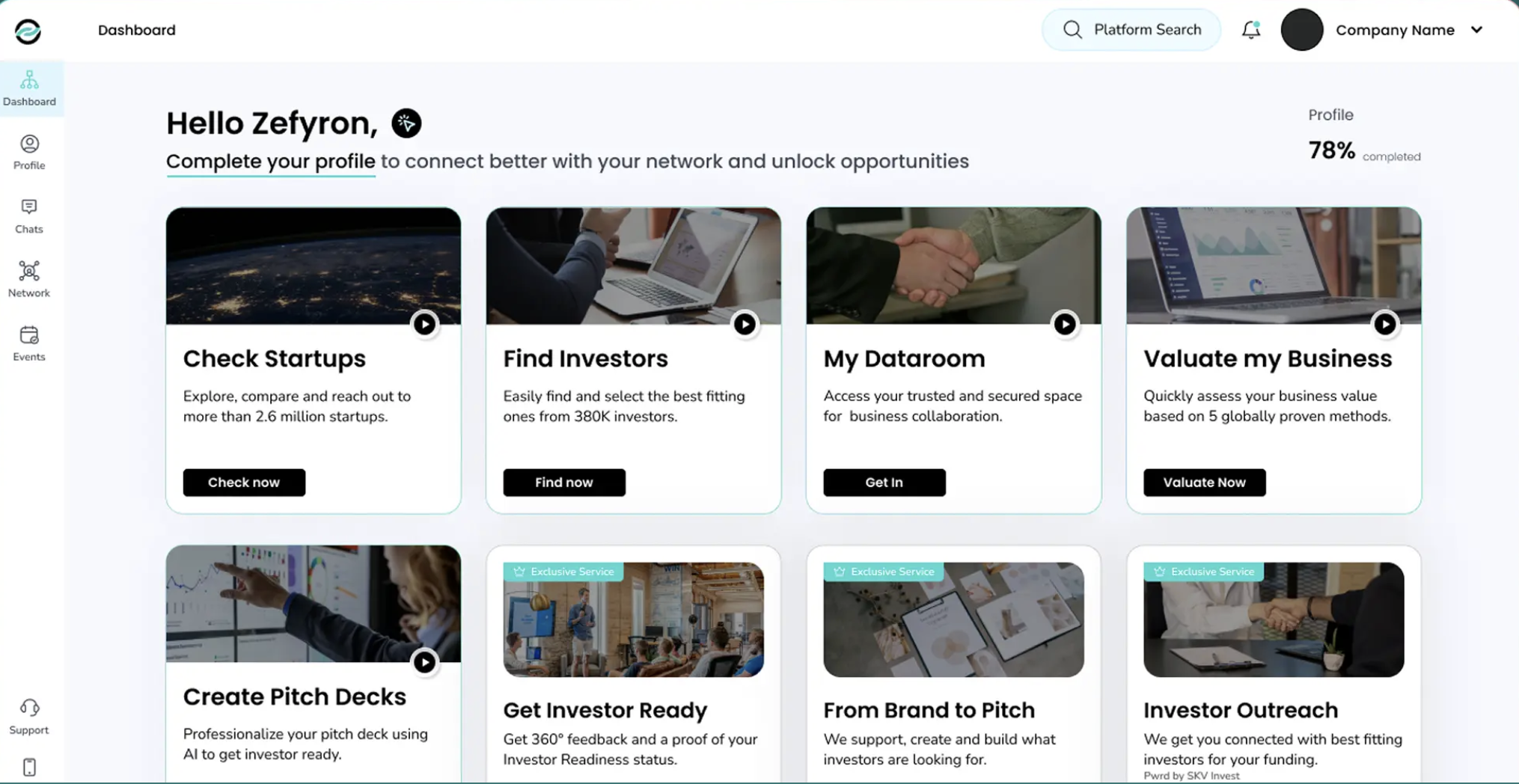
Most fundraising tools hand you a list of names and wish you luck. Zefyron's approach is different. Its intelligent matchmaking engine scans investor thesis data, funding stage preferences, and sector focus to surface the investors most likely to say yes to your specific deal. That matters because, across the 27 platforms we reviewed, only 22% list any automation features at all. Zefyron is one of those rare few.
What sets it apart further is ecosystem reach. While most platforms connect founders only with venture capital firms, Zefyron spans corporate partners and academic institutions too. If you're a deep tech startup that needs both funding and a research collaboration, or a B2B SaaS company where a corporate strategic investor makes more sense than a pure financial VC, Zefyron's network covers that ground. Founders can explore the full platform capabilities on the Zefyron startup funding platform page.
That's worth a conversation before you commit, especially for pre-revenue teams. But for founders who need breadth of investor type and AI-driven targeting in one place, no other platform on this list does both.
Get your idea funded with Zefyron with FREE SIGN UP
Key Takeaway: Zefyron is the only platform here that combines AI matchmaking with connections across investors, corporates, and academia in a single workflow.
Kickstarter is the most recognized name in rewards-based crowdfunding. It runs on an all-or-nothing model: you only receive funds if your campaign hits its goal by the deadline.

Kickstarter has one of the most active backer communities of any crowdfunding platform. The most successful campaign categories are games, design, and technology. Think tabletop games with cult followings, hardware gadgets, and creative tools. Early-stage hardware companies have demonstrated that product validation on Kickstarter can attract larger investors downstream.
The platform charges a 5% fee on successfully funded projects, plus payment processing costs that vary by transaction. If your campaign fails to hit its goal, you pay nothing and backers are never charged. That all-or-nothing model creates real pressure to market hard before launch. Campaigns with 30-day windows tend to outperform longer ones.
It's genuinely not the right fit for software startups or B2B companies. If your product can't be photographed, demoed in a video, and delivered to a backer, Kickstarter's community won't connect with it.
Indiegogo appeals to tech entrepreneurs who want more flexibility than Kickstarter's all-or-nothing structure allows. Campaigns can keep whatever they raise even if they fall short of the goal, which reduces campaign risk significantly.
Its InDemand feature lets campaigns continue collecting pre-orders after the initial funding period ends. That's a serious advantage for hardware startups that want to keep revenue flowing during manufacturing. One well-documented example: a smart golf trolley raised over $880,000 on Indiegogo by pre-selling to backers before a single unit shipped.
Indiegogo welcomes a wider range of projects than Kickstarter, including community and social impact campaigns alongside tech and innovation. The platform tends to attract early adopters who genuinely want to try new things, which makes it a good fit for founders solving niche problems with novel products. The downside is that without the all-or-nothing pressure, some campaigns drift without urgency. You need your own marketing engine running before you launch.
If your product needs a long tail of pre-orders beyond a campaign window, Indiegogo's structure earns it a spot on this list.
StartEngine is one of the dominant equity crowdfunding platforms in the US. It connects founders with both accredited and non-accredited investors, which makes it accessible to a wide investor pool.
StartEngine has raised over $1.2 billion and counts more than 1.8 million registered investors on the platform. The platform has seen campaigns reach significant milestones, which gives a sense of what serious growth-stage traction looks like here.
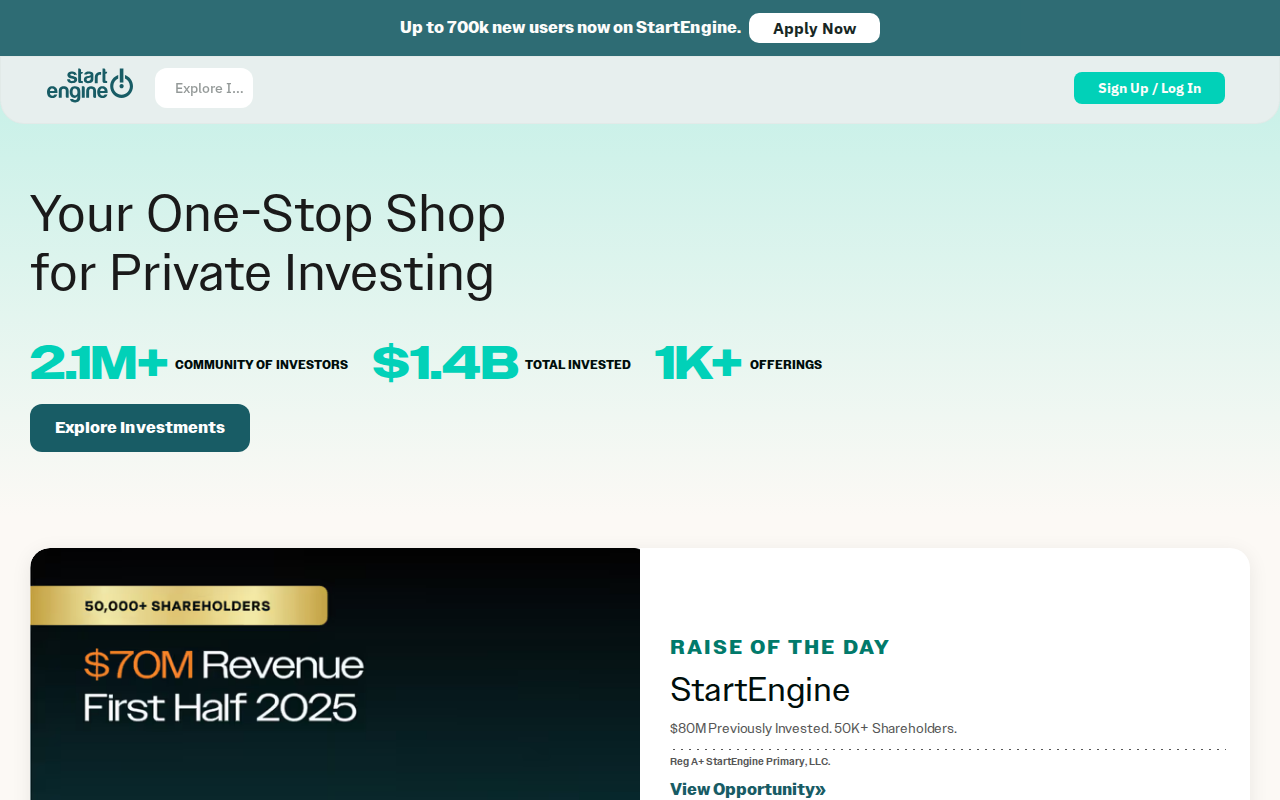
StartEngine skews toward founders who understand the mechanics of equity offerings and investor relations. This is not a "post and hope" platform. You'll need a well-prepared pitch, a clear valuation story, and the capacity to manage ongoing investor communications after you close. The platform is public, meaning anyone can browse campaigns and see exactly how much each startup has raised, which adds credibility but also exposes weak momentum. If your first 48 hours are slow, it shows.
Best for startups that have already validated their product and are raising to grow operations, not to build the first prototype.
Fundable is an equity-based fundraising platform focused on US startups seeking accredited investors. The platform matches projects with accredited investors registered in the US.
The platform's standout feature is its guided fundraise option. Instead of running the campaign yourself, Fundable's team builds your pitch deck, runs investor research, writes outreach emails, and coaches you on pitching. That kind of support is rare at the platform level and genuinely useful for first-time founders who haven't run a structured fundraise before. The self-managed path is also available for teams that want control.
Fundable doesn't take a percentage of what you raise, which is unusual among equity platforms. The trade-off is a $179 monthly subscription fee to keep your campaign live. For an early-stage team burning cash, that's a real cost to factor in before you start. And because the platform is limited to US accredited investors, international founders or teams raising from non-accredited retail investors need to look elsewhere.
The subscription model makes Fundable a calculated bet: worth it if you're ready to run a real raise, less so if you're still testing the waters.
Crowdcube is a UK-founded equity crowdfunding platform that has been operating since 2010. It's built for European startups raising capital from a mix of retail and sophisticated investors.
The platform offers two fundraising structures. One is designed for speed, where startups can raise quickly without needing a lead investor in place first. The second is a full public campaign with broader investor outreach. That flexibility is useful depending on whether you have existing investor momentum or need to build it from scratch. The broader European crowdfunding market has grown substantially since the European Crowdfunding Service Providers Regulation (ECSPR) came into force, which now allows platforms to operate across EU member states under a unified framework.
Crowdcube works best for consumer-facing and tech startups that have a story worth telling to a community of retail investors. The platform's investor base skews toward people who back brands they believe in, not just financial instruments. That's a strength if your startup has genuine consumer appeal, but a weakness if you're building B2B infrastructure where the audience won't connect emotionally with the company.
For European founders, Crowdcube is a serious option. For US-based teams, the investor pool and regulatory context make it a poor primary choice.
Metal is an AI-powered fundraising platform purpose-built for pre-seed, seed, and Series A rounds. It's the most technically sophisticated investor-targeting tool available to individual founders right now.
The platform's Investor Patterns engine uses more than 20 filters to identify investors by stage, sector, check size, geography, and thesis alignment. Its Building Access feature pulls warm introduction paths from your Gmail and LinkedIn connections. There's a fundraising-native CRM called Pipeline Formation, a Content Signals tool that tracks which investors are actively publishing about your sector, and Round Coach and Call Intelligence features that analyze pitch performance after investor meetings. More than 100 YC alumni have used it post-Demo Day.
The price is $249 per month (or $200 per month billed annually). That's real money for a pre-revenue team. The free trial helps, but founders need to commit to using the data actively. Metal doesn't fundraise for you. It gives you the intelligence to run a precision raise yourself.
Pro Tip: Before paying for Metal, connect your Gmail and LinkedIn first. The warm-intro mapping only works if you've given the platform enough network data to analyze - thin connections produce thin results.
Harmonic is an AI investor matching platform that connects founders with venture capital firms. It's built for mid-stage startups that have traction but haven't yet built a deep network of investor relationships.
The platform uses machine learning to surface relevant investors based on company data, sector signals, and funding stage. It's less granular than Metal's approach. Harmonic offers basic pipeline tracking but doesn't have the same depth of relationship intelligence or call coaching features. Pricing is custom, meaning you'll need a direct conversation before you know what it costs.
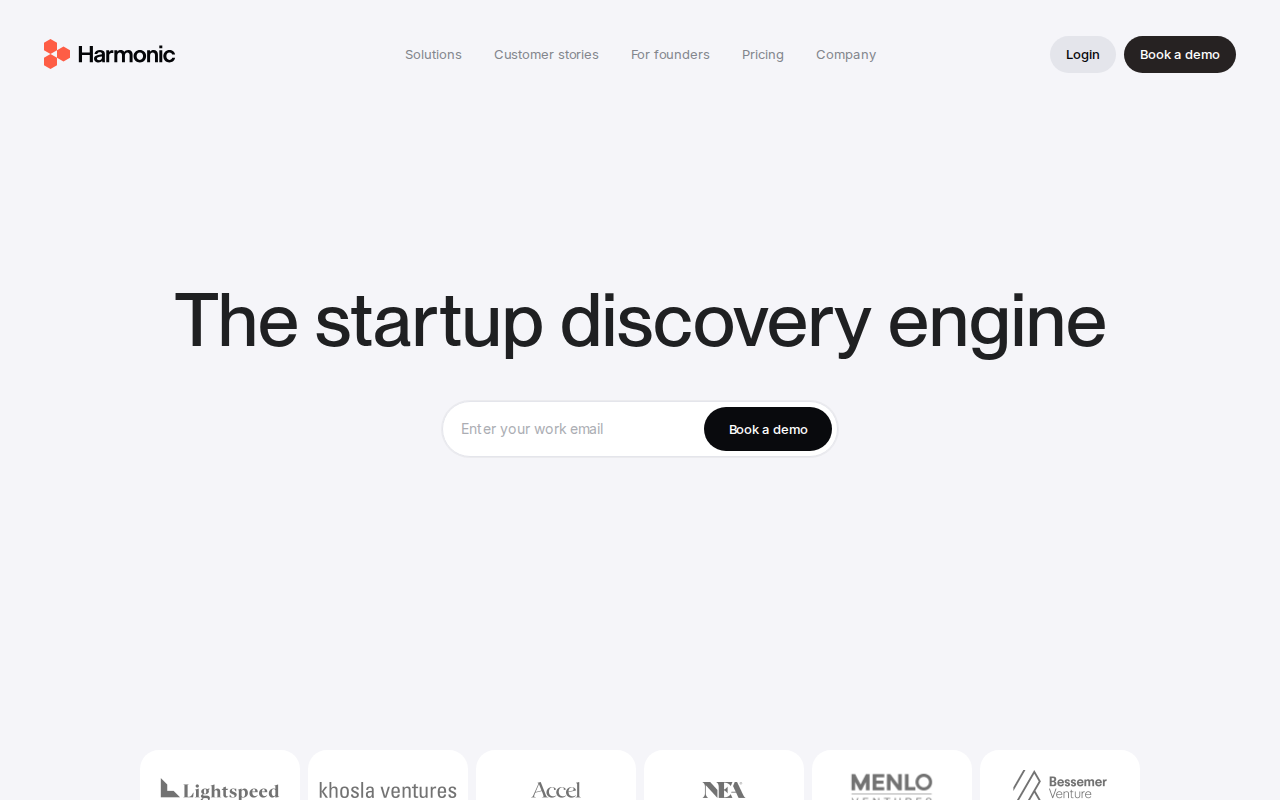
Where Harmonic earns its place is in the middle of the market. It's more structured than a simple investor database, but less intensive to set up than a full platform like Metal. Founders who know their sector well and just need a smarter way to filter investors will get real value here. Teams that need deep relationship mapping or pitch coaching will hit its limits quickly.
Harmonic is a sensible choice for Series A and B founders who want AI-assisted targeting without committing to a full-featured precision raise workflow.
Foundersuite is a fundraising CRM and investor database designed for early-stage founders who need organized pipeline management without a premium price tag. Plans range from $99 to $299 per month.
The platform gives founders a searchable investor database with filters for stage, sector, and geography, paired with a general-purpose CRM for tracking outreach and follow-ups. It includes fundraising templates that help structure pitch emails and investor updates. Founders who are running their first raise and have never managed a pipeline will find it a significant step up from a spreadsheet.
The honest limitation: Foundersuite has no AI intelligence or pattern matching. There's no automated investor recommendation engine. Every targeting decision is manual. That's fine if you already know your investor universe well, but it means more research work upfront compared to Metal or Harmonic. For founders handling seed-stage fundraising for the first time, the structured templates and CRM alone may justify the cost.
Patreon is a subscription platform where fans and supporters pay recurring monthly amounts to back creators and businesses they love. It's a fundamentally different model from equity or rewards crowdfunding.
For creator-led startups, including podcasters, online educators, indie software developers, and community-driven brands, Patreon can be a genuine revenue base rather than a one-time fundraising campaign. Supporters get exclusive content, early access, or community membership in exchange for their monthly pledge. The recurring nature means predictable monthly revenue, which is something no single-campaign platform offers.
Patreon takes a percentage of monthly revenue (the exact rate depends on the plan tier). It's not designed for B2B startups or companies seeking equity investors. But for founders whose product is tied to an audience, it's a sustainable funding layer that runs alongside more traditional investor raises. Think of it as community revenue, not investor capital.
Every platform above serves a different founder profile. This table maps the key decision variables so you can match your situation to the right tool quickly.
| Platform | Funding Model | Fee Structure | AI / Automation | Best Fit | Key Limitation |
|---|---|---|---|---|---|
| Zefyron | AI matchmaking (investors, corporates, academia) | Custom / enterprise | Yes — intelligent matchmaking + workflows | Founders needing broad ecosystem connections | Pricing not public |
| Kickstarter | Rewards-based | 5% of funds raised plus payment processing costs | None | Physical products, games, creative projects | All-or-nothing; no equity option |
| Indiegogo | Rewards-based (flexible or fixed) | 5% platform fee | None | Tech gadgets needing long pre-order window | Lower backer urgency than Kickstarter |
| StartEngine | Equity crowdfunding | Varies by offering type | None | Growth-stage US startups selling shares | Requires strong investor relations capacity |
| Fundable | Equity + rewards hybrid | $179/month (no % taken) | None | US startups with accredited investor target | US accredited investors only |
| Crowdcube | Equity crowdfunding | Varies; success-based fee | None | European consumer and tech startups | Primarily UK/EU investor base |
| Metal | AI investor intelligence (CRM + targeting) | $249/month or $200/month annually | Yes — 20+ filter AI + call intelligence | Pre-seed to Series A precision raises | Premium price; no fundraising execution |
| Harmonic | AI investor matching | Custom pricing | Yes — AI matching, basic pipeline | Mid-stage startups needing VC targeting | Limited relationship intelligence |
| Foundersuite | Fundraising CRM + investor database | $99–$299/month | None | Early-stage teams managing first raise | No AI recommendations; manual targeting |
| Patreon | Subscription / recurring community funding | % of monthly revenue (plan-dependent) | None | Creator-led startups with an existing audience | Not suited to equity or institutional raises |
For startups comparing platforms that handle the full raise workflow, Zefyron's startup ecosystem tools stand apart by covering investor, corporate, and academic connections in one place.
The right platform depends on three things: your funding model, your stage, and your target investor type. Getting these wrong means spending months on a platform that was never going to work for your deal.
Start with your funding model. Rewards-based crowdfunding (Kickstarter, Indiegogo) works when you have a physical product that backers can pre-order. Equity crowdfunding (StartEngine, Crowdcube, Fundable) works when you're selling ownership stakes and have enough traction to attract investors. AI-driven targeting (Zefyron, Metal, Harmonic) works when you need to find the right investors fast rather than broadcasting to a general audience. Subscription models (Patreon) work only for creator-led businesses with a loyal following.
Then match to your stage. Pre-seed and seed founders with thin networks benefit most from AI matching, because manual research eats time they don't have. Series A and later-stage founders often have enough existing relationships that a CRM like Foundersuite is sufficient. Growth-stage startups with real revenue can use equity platforms like StartEngine to access a wide retail investor base. Growing startups should also think through the governance implications: equity crowdfunding means real shareholders, reporting obligations, and less control over future rounds. Sound vendor and operational discipline matters here too - the same way IT vendor management helps SMBs control costs and complexity, choosing a fundraising platform that fits your infrastructure prevents expensive course corrections later.
Consider geography. Fundable and StartEngine are US-focused. Crowdcube's strength is in the UK and EU. Zefyron operates across markets, which matters if you're building an international business and need investors from multiple regions.
Finally, look at what the platform actually gives you in exchange for its fee. Platforms that take a percentage of funds raised are low-risk upfront but expensive at scale. Monthly subscription models cost money whether you close or not. Custom enterprise pricing (like Zefyron's) shifts the value conversation to ROI on the matches you make, not the percentage you give up. A strong pitch deck helps wherever you land. Zefyron even offers pitch deck templates to help founders prepare before they reach investors.
What is the best fundraising platform for early-stage startups?
Zefyron is the strongest choice for early-stage founders who need AI-driven investor matching across multiple investor types including VCs, corporates, and academic partners. For founders raising via equity crowdfunding on a budget, Foundersuite offers an affordable CRM starting at $99/month. For product-based startups, Kickstarter and Indiegogo remain the go-to options for rewards-based campaigns with large backer communities.
What's the difference between rewards crowdfunding and equity crowdfunding?
Rewards crowdfunding (Kickstarter, Indiegogo) lets backers pre-order a product or receive a perk in exchange for their pledge - no ownership changes hands. Equity crowdfunding (StartEngine, Crowdcube, Fundable) sells shares in your company to investors. Equity routes mean investors become part-owners, creating ongoing reporting obligations and governance considerations that rewards models don't carry.
Do startup fundraising platforms take equity?
Not all of them. Rewards platforms like Kickstarter take a fee (5%) but no equity. Equity crowdfunding platforms may take a success fee or a percentage of funds raised. Fundable takes no equity percentage - it charges a monthly fee instead. AI platforms like Metal and Zefyron charge for platform access or custom pricing, not a cut of your raise.
How important is pre-launch marketing for crowdfunding campaigns?
It's the single most important factor. Campaigns that build an email list and audience before launch consistently raise more on day one, which drives platform visibility and momentum. Building a reservation funnel, running targeted paid ads, and collecting $1 deposits from interested backers before launch can dramatically improve conversion rates compared to collecting email addresses alone.
Can non-US founders use US equity crowdfunding platforms?
Generally no, not as the primary offering. Fundable is limited to US accredited investors. StartEngine focuses on US securities regulations. European founders are better served by Crowdcube (UK and EU) or by AI-driven platforms like Zefyron, which operate across multiple markets without geographic restrictions baked into the core model.
What should I look for in a startup fundraising platform?
Match the platform to your funding model first: rewards, equity, or investor matching. Then check geographic coverage, fee structure (% of raise vs. monthly subscription), whether automation or AI features exist, and what investor types you can actually reach. A platform with no automation and accredited-only access will stall a team that needs speed and breadth.
If you're raising your first round and need connections across investors, corporates, and academic partners in one place, Zefyron is the clearest starting point. For product launches that need community backing, Kickstarter and Indiegogo still deliver reach no other platform matches. For equity raises in the US, StartEngine and Fundable have the investor networks and structure to execute. The shortest path to the right platform is knowing your funding model and your stage. Start there, then pick accordingly. Explore how Zefyron supports startups and see whether the matchmaking fits your current raise.
To explore further insights into such trends and emerging startups, visit Zefyron
◾About Zefyron - Zefyron offers a comprehensive database with 2M startups and 350K investors, facilitating easy connections and networking. Our platform streamlines fundraising and investor scouting with tools like pitch decks and valuations. Users can efficiently manage portfolios, gain insights, host events, and track industry trends for informed decisions and meaningful collaborations.