 ×
× We’ll be at “The 3 Best Public Funding Programs for Startups & Scaleups”with
 Victoria Hoffmann&
 Dr. Marko Häckel•Oct 13 at 11:00–12:00 CEST•
×We’ll be at “The 3 Best Public Funding Programs for Startups & Scaleups”withVictoria Hoffmann&Dr. Marko Häckel•Oct 13 at 11:00–12:00 CEST•
Dr. Marko Häckel•Oct 13 at 11:00–12:00 CEST•
×We’ll be at “The 3 Best Public Funding Programs for Startups & Scaleups”withVictoria Hoffmann&Dr. Marko Häckel•Oct 13 at 11:00–12:00 CEST•
 By Daniel Bode

Picking the wrong venture capital software costs more than money. It costs deals. The right platform keeps your pipeline moving, your relationships warm, and your reporting clean. Here are seven tools worth your attention right now, starting with the one we think beats the field.
Zefyron is an all-in-one platform built specifically for the moment when an investor and a startup need to find each other fast. It connects investors, startups, corporates, and academic institutions through intelligent matchmaking and fundraising workflows, rather than leaving you to cold-search a database manually.
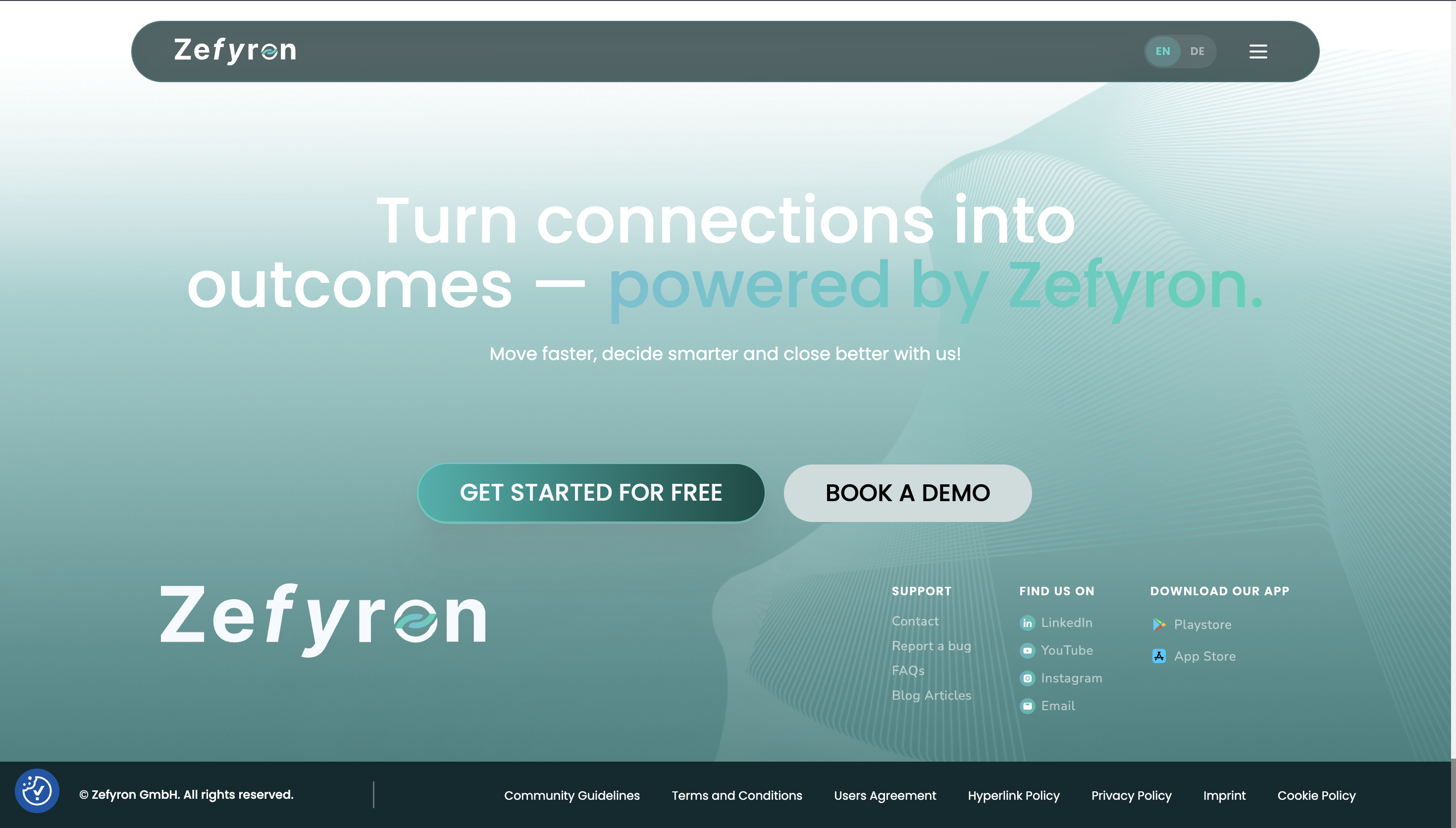
What sets Zefyron apart is the breadth of its network. Most VC tools focus on one side of the table. Zefyron sits at the intersection, giving investors access to pre-vetted startups and giving founders a direct path to capital. The AI layer scores matches based on sector focus, stage fit, and network proximity so you're spending time on introductions that actually go somewhere.
The platform also handles fundraising workflows end-to-end. Startups can build investor pipelines, track outreach stages, and keep documents organized in one place. Investors get dashboards that surface relevant deal flow without the noise. That's a meaningful difference from generic CRMs where you spend half your time configuring fields.
For corporates and university spinouts looking to connect with early-stage capital, Zefyron's inclusion of academia and corporate innovation teams makes it genuinely unique. No other platform on this list does that out of the box.
One honest caveat: because Zefyron spans so many user types, teams with very narrow deal mandates (say, a deep-tech-only fund) may need to spend time tuning filters to surface the right matches. But for most investors and founders, the signal-to-noise ratio is good from day one. If you want to see how it fits your deal flow process, the Zefyron startup funding platform page lays out the full capability set clearly.
Key Takeaway: Zefyron is the strongest all-in-one pick for investors who want AI-powered matchmaking, fundraising workflows, and a multi-stakeholder network under one roof.
Visible.vc focuses on one thing most VC platforms treat as an afterthought: keeping your LPs and portfolio companies genuinely informed. It's a portfolio reporting tool built for fund managers who need to send regular updates without spending hours pulling data from spreadsheets.
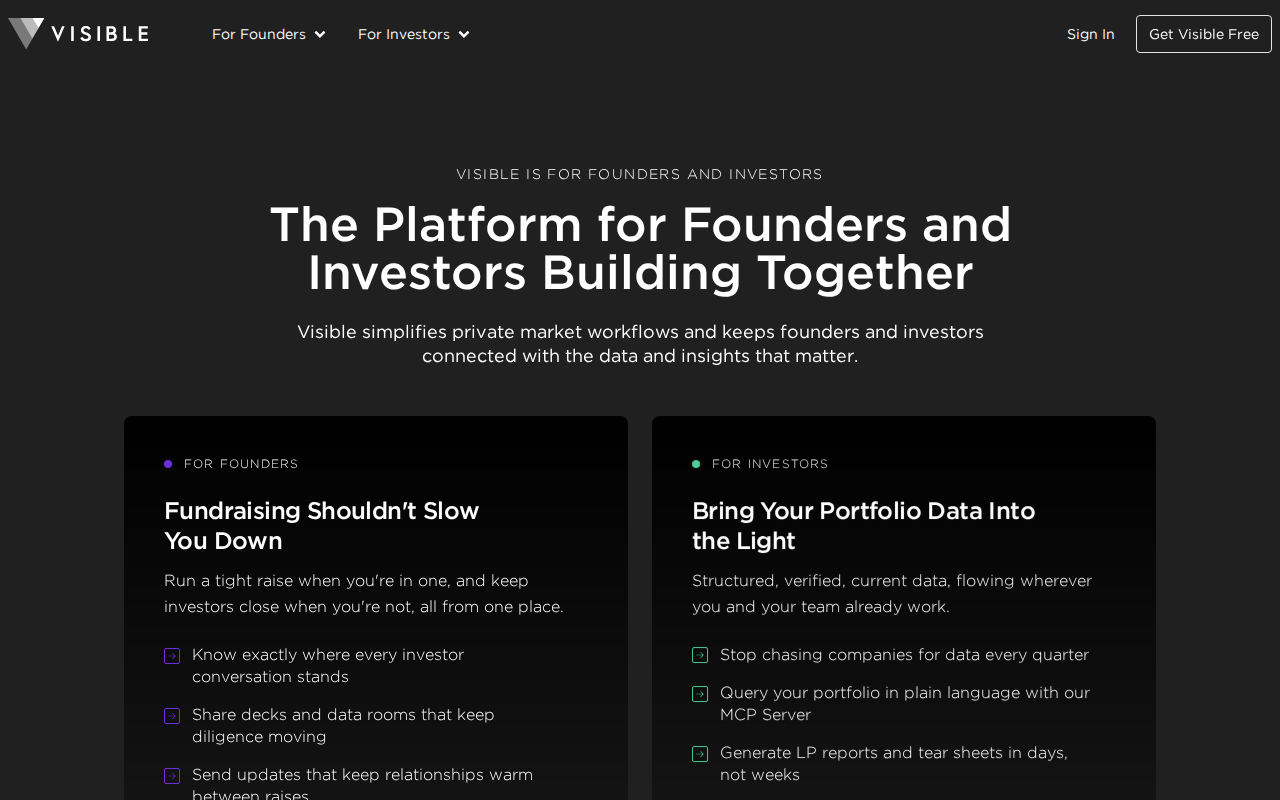
The core workflow is straightforward. Founders submit KPI data through a simple request form. Visible pulls that data into templated reports. You review, customize, and send updates to your LPs in a fraction of the time a manual process would take. For funds with ten or more portfolio companies, that time saving adds up fast.
Visible also has a built-in data room and a basic CRM layer for managing investor relationships. It's not deep relationship intelligence, but it handles the reporting side well. The Forbes Midas List consistently features investors from firms that treat LP communication as a competitive advantage, and Visible is the tool most commonly cited by smaller emerging managers for exactly that reason.
Caveat: Visible is not a deal-sourcing tool. If your primary need is finding and closing new investments rather than managing existing ones, you'll need to pair it with something else. For post-close portfolio management and LP relations, though, it's one of the cleaner options available.
Affinity is a CRM built specifically for relationship-driven dealmaking. According to Affinity's official platform documentation, the system automatically captures data from email and calendar activity to keep your pipeline current without manual updates. That one feature alone changes how deal teams operate day to day.
The relationship intelligence layer is where Affinity earns its spot. It maps your team's collective network so you can instantly see who has the strongest connection to a target founder or decision-maker. Firms like Bessemer and Notable Capital use Affinity to surface warm introductions that turn cold outreach into genuine conversations.
For VC firms in particular, a traditional sales CRM doesn't fit. Venture deals don't follow a short funnel. They follow years of relationship-building, and a tool that treats every contact like a sales prospect misses the point. Affinity understands that distinction and builds around it.
Caveat: Affinity is an enterprise-grade product, and smaller funds or solo GPs may find the cost hard to justify against simpler options. It also requires time to set up pipeline stages correctly. If your firm has three or more investment professionals, the collaboration features pay off quickly. If you're a single-person fund, it may be more than you need.
Carta is the standard for cap table management among venture-backed startups and the VC firms that invest in them. It handles share classes, SAFEs, convertible notes, and ownership percentages in real time, replacing the version-control nightmare of spreadsheet cap tables.
For VC firms, Carta's value is on both sides of a deal. Investors can see live portfolio data across all their companies in one view. Founders issue equity grants, manage vesting schedules, and run 409A valuations without engaging separate vendors for each task. The integration of live cap table data, portfolio management, and equity plans lets VCs share real-time ownership data with their LPs while cutting manual reporting work.
Scenario modeling is one of the more useful features for deal teams. Before closing a round, you can model dilution scenarios and compare post-money ownership structures so nobody walks into a board meeting with numbers that don't hold up. That's the kind of feature founders typically underestimate until they actually need it.
Caveat: The platform has moved upmarket over the years, and the renewal cost surprises some smaller funds at growth thresholds. If budget predictability matters to you, review the pricing tiers carefully before committing. That said, for any fund managing more than a handful of portfolio companies, Carta's accuracy and time savings justify the investment.
Dealroom is a data intelligence platform covering the global startup and investor ecosystem. It's the tool analysts reach for when they need to answer questions like: which sectors are attracting capital right now, which firms are most active in a specific geography, or how does a target startup's growth compare to its peers.

The depth of Dealroom's database is genuinely impressive. It covers funding rounds, valuations, investor portfolios, and startup metrics across Europe, the US, and Asia. For funds with a geographic or sector mandate, it gives context that generic databases often lack. The platform also publishes regular ecosystem reports that have become reference material for LPs and fund managers alike.
Caveat: Dealroom is a research and sourcing tool, not a CRM. You'll find opportunities in Dealroom, but you'll manage those relationships somewhere else. Teams that try to use it as a primary deal management hub end up frustrated. Think of it as the intelligence layer that feeds your pipeline, not the pipeline itself.
For a fund building out its early-stage deal sourcing capabilities in European markets, pairing Dealroom's market data with Zefyron's matchmaking network gives you both the research and the direct access you need.
Foundersuite approaches the VC software question from the startup's side. It's a fundraising CRM designed to help founders track investor relationships, manage outreach, and stay organized through a fundraising round without losing momentum.
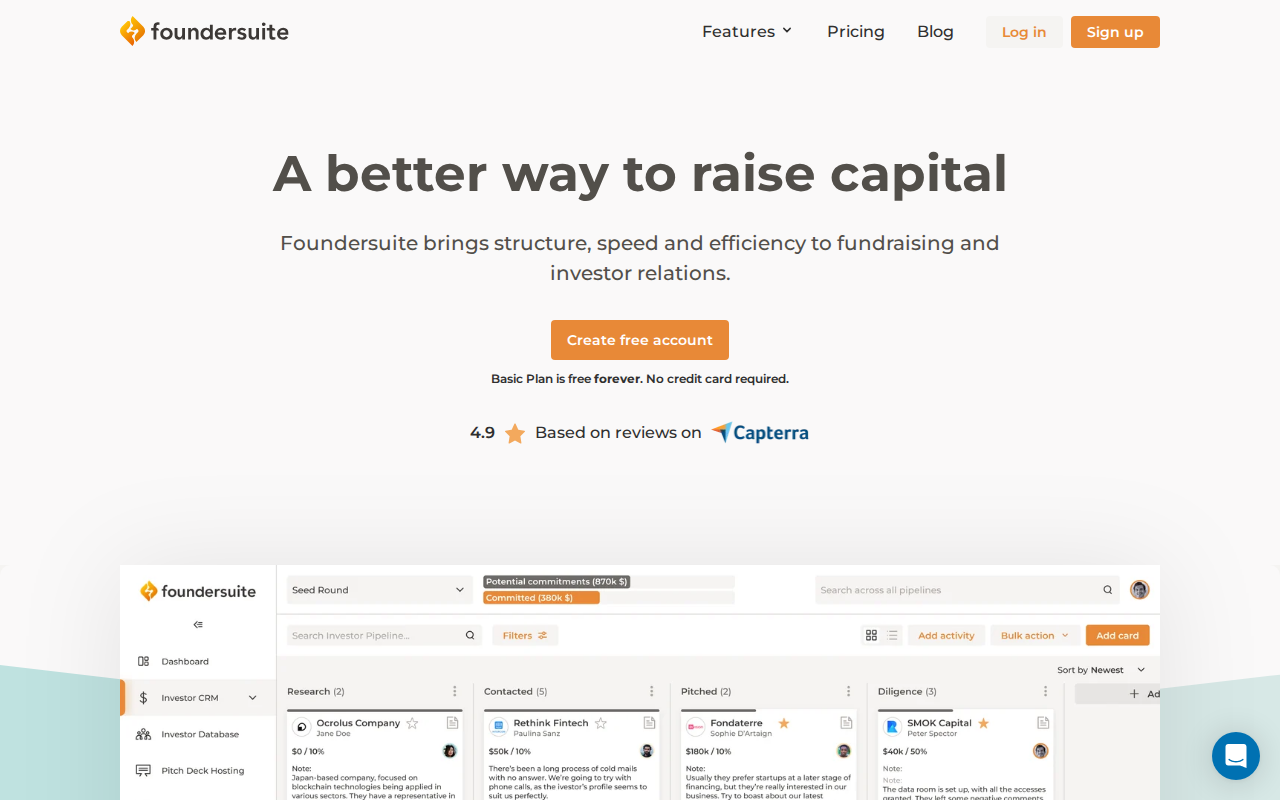
The product centers on a Kanban-style investor pipeline. Founders move contacts through stages from initial research to closed check. It keeps notes, email threads, and follow-up reminders in one place so nothing slips between cracks during a raise that might last six months or longer. For first-time founders especially, having that structure prevents the most common fundraising mistakes.
Foundersuite also includes an investor database with thousands of verified VC contacts, filtered by stage, sector, and geography. That's useful for founders building their initial target list, though the depth of data doesn't match what a dedicated intelligence platform like Dealroom provides. The sweet spot is founders who want CRM plus a starter list in one subscription rather than managing multiple tools.
Caveat: Foundersuite is founder-first. It's not built for VC firms managing deal flow at scale. If you're an investor rather than a founder, the other tools on this list will serve you better. But for a startup in the middle of a seed or Series A round, it removes a lot of organizational friction.
4Degrees is a relationship intelligence CRM built specifically for private capital markets. According to 4Degrees' official platform, it uses a relationship strength scoring algorithm to identify the warmest path into any startup via a warm introduction, which is a meaningful upgrade over cold outreach that relies on guesswork.
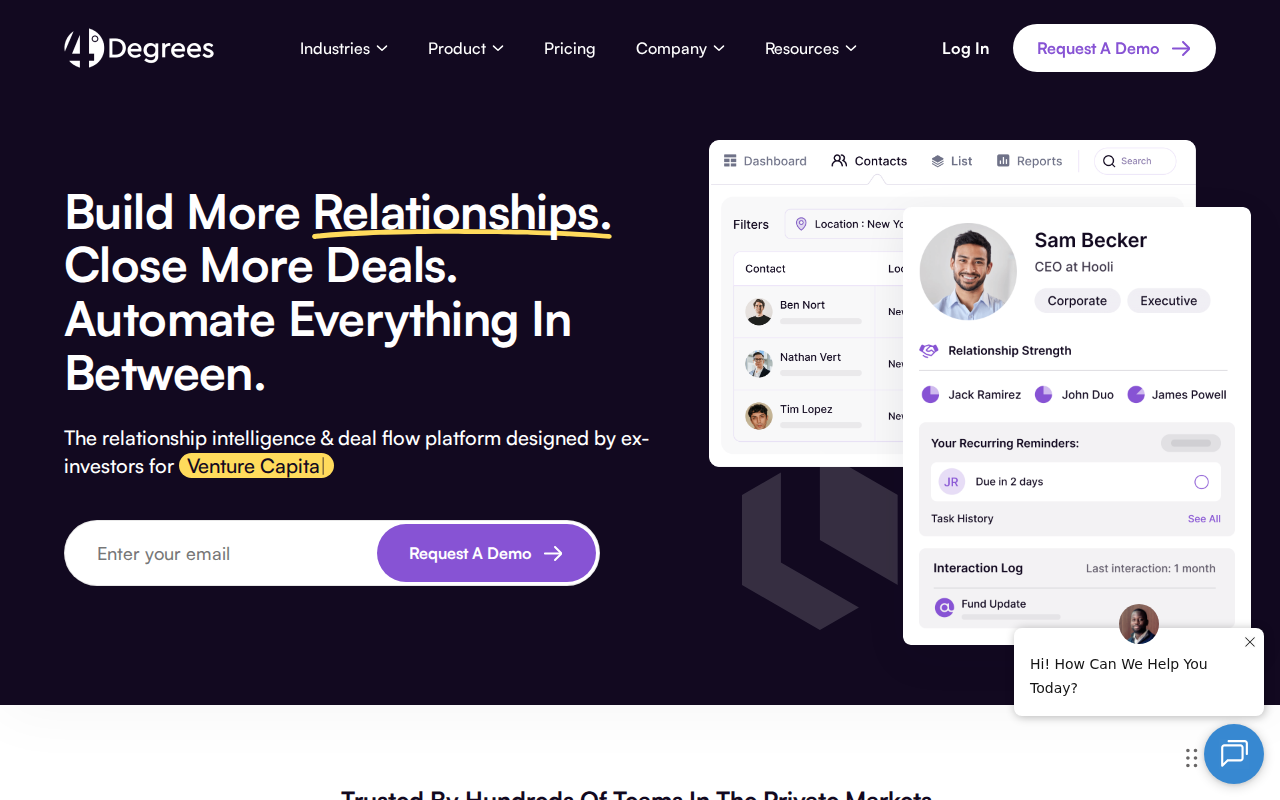
The platform integrates with Gmail, Outlook, and Office 365 to log every email and meeting automatically. It pulls enrichment data from Crunchbase and PitchBook, so contact profiles stay current without manual updates. For deal teams that want to stop entering data and start using it, the automation layer removes a significant daily burden.
Portfolio monitoring is also built in. GPs can track LP commitments, co-investor relationships, and portfolio company updates from a single dashboard. The reporting dashboards generate LP update materials automatically, pulling live data so you're not rebuilding the same tables each quarter.
Caveat: 4Degrees positions itself against Affinity directly, and the comparison is fair. The main differentiator is that 4Degrees tends to be more accessible for smaller and emerging manager funds, while Affinity is more common at larger multi-partner firms. If your firm is under ten people and you want relationship intelligence without enterprise pricing, 4Degrees is worth a close look.
The right tool depends entirely on where your biggest bottleneck is. A fund losing deals to slow follow-up needs a relationship CRM. A fund drowning in LP reporting needs a portfolio tool. A startup trying to close its first round needs a fundraising CRM, not an enterprise data platform.
| Tool | Best For | Key Strength | Watch Out For |
|---|---|---|---|
| Zefyron | Investors and startups seeking AI-matched introductions | All-in-one matchmaking + fundraising workflows | Filter tuning needed for narrow mandates |
| Visible.vc | Fund managers sending LP updates | Fast, templated portfolio reporting | Not a deal-sourcing tool |
| Affinity | Multi-partner firms tracking complex deal pipelines | Automated relationship intelligence from email/calendar | Enterprise pricing, setup time required |
| Carta | Cap table management and equity tracking | Real-time ownership data, scenario modeling | Pricing scales sharply at growth thresholds |
| Dealroom | Market research and sourcing intelligence | Deep global startup and investor data | Not a CRM; pair with a relationship tool |
| Foundersuite | Founders managing a fundraising round | Kanban pipeline + investor database in one tool | Built for founders, not fund managers |
| 4Degrees | Emerging managers wanting relationship intelligence | Relationship scoring, auto-enrichment from PitchBook | Data depth vs Affinity at larger firms |
Before you commit to any platform, run it against three criteria. First, does it reduce manual data entry in your current workflow? Second, does it integrate with your email and calendar so activity is captured automatically? Third, does pricing stay predictable as your portfolio or team grows? If a tool fails on any of these, you'll end up working around it rather than with it.
Teams evaluating their broader technology needs often find that accurate business valuation capabilities become a core requirement as the portfolio scales. Build that into your evaluation early.
Pro Tip: Start with a 30-day trial of your top pick and measure one concrete metric: how many hours data entry before and after. That number tells you more than any feature comparison.
What does venture capital software actually do?
Venture capital software helps VC firms and startups manage the full investment lifecycle. It covers deal sourcing, pipeline tracking, investor relationship management, cap table maintenance, LP reporting, and fundraising workflows. The goal is to replace manual spreadsheets and disconnected email threads with a single system that keeps every deal, relationship, and document organized and accessible.
Is there one platform that does everything for a VC firm?
Zefyron comes closest for firms that need matchmaking, deal flow management, and fundraising workflows in one place. Most mature VC tech stacks still combine two or three tools: a relationship CRM for pipeline and outreach, a cap table tool like Carta for equity tracking, and a reporting tool for LP updates. The right combination depends on your fund size and deal volume.
What's the difference between a VC CRM and a regular CRM?
A regular CRM is built for short, transactional sales cycles. A VC-specific CRM is designed for long, relationship-driven deal cycles where a single introduction can take years to convert. VC CRMs prioritize relationship intelligence, warm introduction mapping, and automatic activity capture from email and calendar, rather than lead scoring or sales funnel conversion rates.
How much does VC software typically cost?
Pricing varies widely. Founder-focused tools like Foundersuite start at a few hundred dollars per month. Enterprise platforms like Affinity and Carta price on a per-user or per-portfolio-company basis and can run into thousands per month for larger teams. Most platforms offer a free trial or demo. Always check what happens to your bill as your team or portfolio grows past early thresholds.
Can startups use the same tools as VC investors?
Some tools, like Zefyron, are designed to serve both sides of the table. Others are investor-first (Affinity, 4Degrees) or founder-first (Foundersuite). Carta is used heavily by both. For startups, the priority is usually a fundraising CRM and a cap table tool. For investors, relationship intelligence and portfolio reporting tend to be the higher-value capabilities.
What should I look for first when evaluating these tools?
Start with the biggest pain in your current process. If deals are slipping through gaps in follow-up, prioritize relationship intelligence. If LP reporting takes two days each quarter, start with a portfolio reporting tool. The best venture capital software is the one that solves your real bottleneck, not the one with the longest feature list. Request a live demo using your actual deal data, not the vendor's sample data.
If you're building or running a fund and need to move faster on deals, Zefyron is the place to start. The AI matchmaking, combined with built-in fundraising workflows and a network that spans startups, corporates, and academia, gives you capabilities that no single competitor replicates. Visit Zefyron.com and request a demo with your actual deal criteria to see the match quality for yourself.
To explore further insights into such trends and emerging startups, visit Zefyron
◾About Zefyron - Zefyron offers a comprehensive database with 2M startups and 350K investors, facilitating easy connections and networking. Our platform streamlines fundraising and investor scouting with tools like pitch decks and valuations. Users can efficiently manage portfolios, gain insights, host events, and track industry trends for informed decisions and meaningful collaborations.